Reformed Church University IR
You have now entered a space rich in academic excellence, featuring publications by Reformed Church University staff members. This open-access platform covers a wide range of disciplines and is accessible at all times.
The articles published here meet the highest standards of academic excellence, providing valuable knowledge and research to scholars, students, and the wider community.
Welcome, and make full use of this rich academic resource.
For more information about the university, visit us at Reformed Church University .
Explore RCU IR
Discover services, guides, research support and learning resources available through the RCU Institutional Repository.
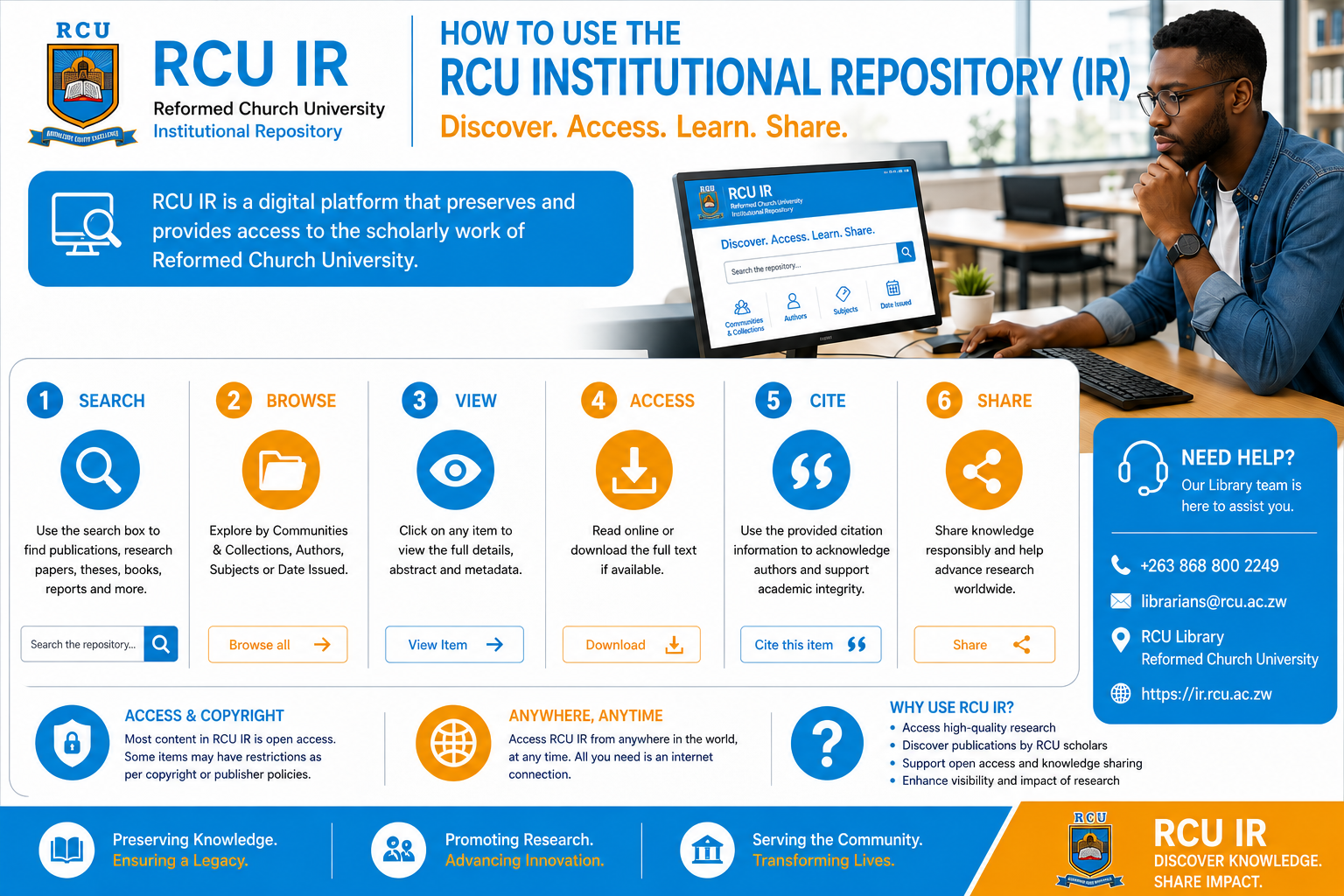
How to Use RCU IR
Learn how to search, browse, access, cite and share scholarly resources in the repository.
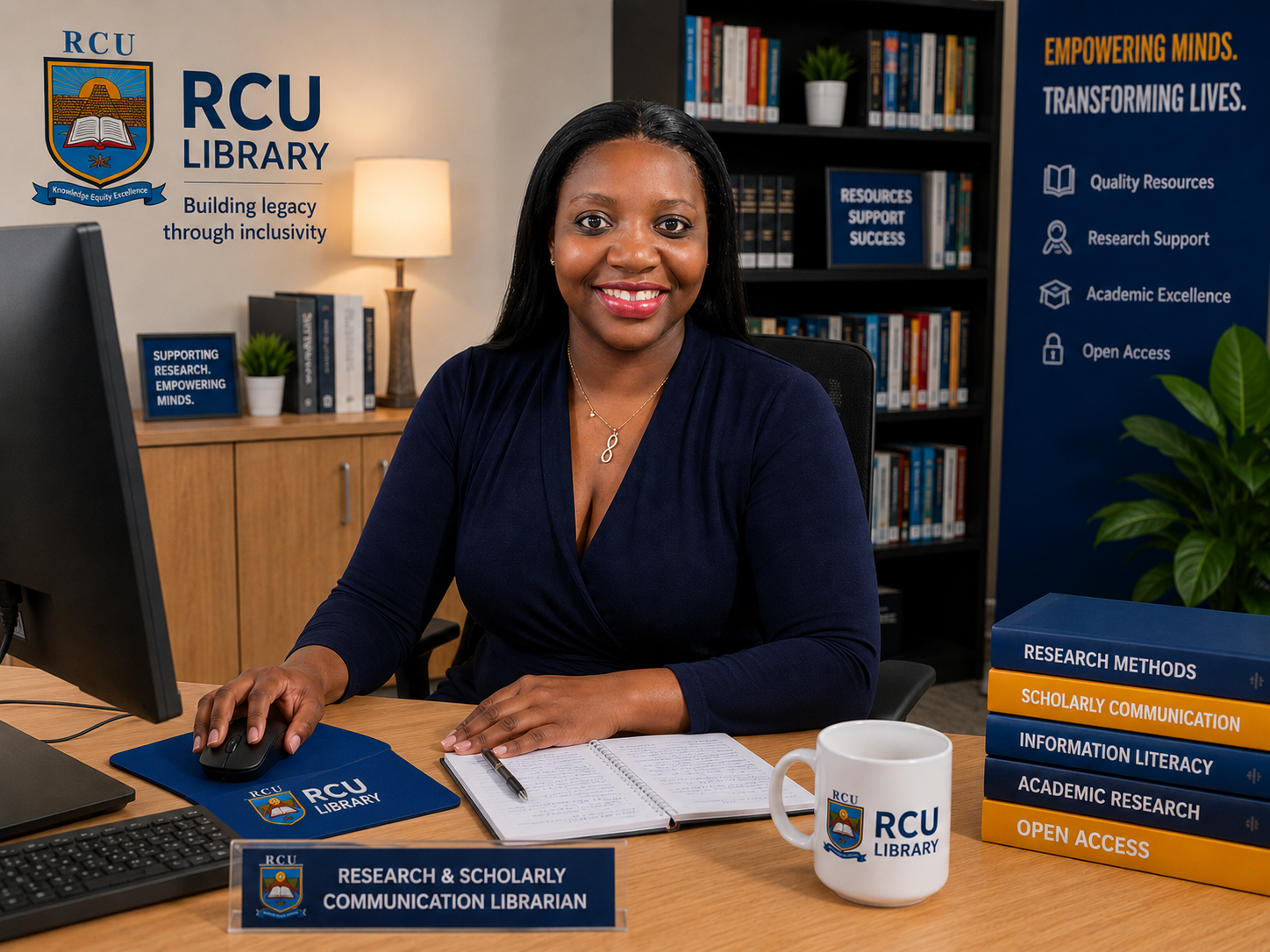
Research & Scholarly Communication Librarian
Get support with research visibility, scholarly communication, citation guidance and open access.

Client Services Librarian
Receive user support, library guidance and assistance in accessing academic resources.

Students Studying
RCU IR supports students with access to scholarly works, research outputs and learning materials.
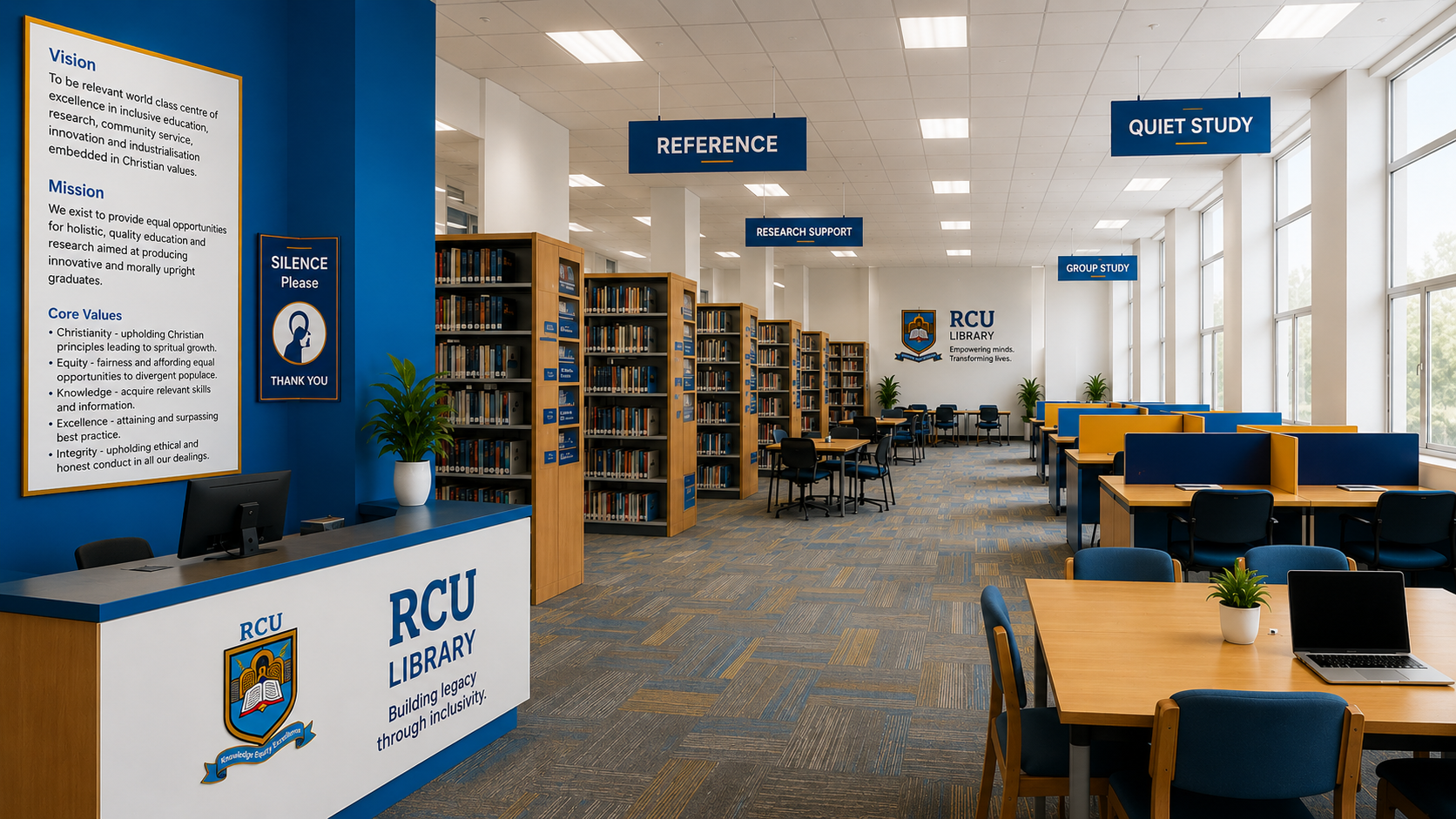
RCU Library
Explore the RCU Library environment, study spaces, reference support and research services.
Communities in DSpace
Select a community to browse its collections.
- Research publications, theological studies, cultural heritage materials, dissertations, and academic works from the Faculty of Arts, Theology, Culture and Heritage Studies.
- Academic research outputs, dissertations, publications, and scholarly materials from the Faculty of Commerce.
- Research outputs and academic publications from the Research outputs and academic publications from the Faculty of Science and Technology.
Recent Submissions
Item type: Item , Self-Definition in Black Experience as Existential Consciousness and Gaslighting: The Case of The Lemba People’s Claim to Jewish Origin and Identity(Journal Of Inclusive & Innovative Practices, 2025-09-15) Rabson Wuriga; Joel Gift MarasheIn Black experience, self-definition refers to one's perception or understanding of oneself, as opposed to being defined by those who do not have the same experience. Its expression is seen as existential consciousness of one’s origin, identity, customs and heritage. The Lemba’s claim as Black people and descendants of traders from Ancient Israel provoked a lot of critical reaction that led to the problem of gaslighting from those who held, and still hold, that the Lemba claim to Israelite/Jewish consciousness was inappropriate and naïve. Gaslighting of the Lemba is an attempt to cause self-doubt among the Lemba concerning their thoughts, feelings and experiences of their origin and identity. The problem is that Western Jewry has refuted the Lemba’s claim to Jewish origin and identity. Therefore, the main focus of the debate is on the critical interpretation and assessment of the earlier Western Jewish refutations and subsequent recognition due to new literature that supports the Lemba position. The issue demonstrates the practices of epistemic aggression, colour bar, ontological othering, colonial invasion, and dread of expanded Jewish cosmopolitanism by certain Western Jews and organisations. Due to the blurring of scientific activity and language expression, the beautiful and sublime, regions such as Europe, America, and Oceania in the 17th and 20th centuries were unsuitable for human reason. This paper contends that when outsiders attempt to define the Lemba’s experience and existence as Black people in Africa with an origin linked to the Ancient Israelites, there is a certain gap in the knowledge of the existential consciousness and identity of the Lemba people. The paper aims to illuminate some of the pressures, and fissures shaping Lemba’s self-definition. The study employs the historical-interpretive techniqueItem type: Item , Demystifying Gender-Based Violence Defilements of Female Students with Disabilities in Higher and Tertiary Inclusive Institutions in Masvingo(Journal Of Inclusive & Innovative Practices, 2025-09-15) Phillimon MahanyaIn Research covering gender-based violence (GBV) against female students with disabilities in tertiary institutions is occurring at a very slow rate. Such studies are imperative towards eradication of, by 2030, gender-based violence against female students with disabilities (FSwDs) enrolled in such settings. Female students with disabilities frequently face challenges in academic and social participation, as they are subjected to discrimination and social exclusion. In particular, they are prevented from accessing academic rights that are freely available to other students at tertiary institutions due to myths and misconceptions surrounding gender-based violence statutes and human rights declarations. The students encounter particular vulnerabilities to violence that are escalated by obstacles in accessing justice. Recent studies show that students with disabilities are ridiculed, viewed as students who are paying for their sins, and perceived as witches and wizards. The researcher adopted the qualitative research approach entrenched in the interpretive paradigm. The study employed the phenomenological design. Focus group discussions and semi-structured face-to-face interviews were used to generate data from female students with disabilities and lecturers in inclusive tertiary institutions. Data generated were thematically analysed. The analysis was rooted in Critical Disability Theory. It emerged that FSwDs are more vulnerable to all forms of violence as a result of their physical status, mental capabilities and the over-dependency syndrome on their education and livelihoods. The need for awareness and sensitisation on GBV and human rights was proffered. Reproductive health information in accessible formats to all students with disabilities, and the enactment of deterrent policies against perpetrators of violence against female students with disabilities at tertiary institutions, were recommended.Item type: Item , The Power of the Marginalised: A Feminist Reading of 2 Kings 5:1-14(Journal Of Inclusive & Innovative Practices, 2025-09-15) Menard MusendekwaThis paper explores a feminist reading of 2 Kings 5:1-14, shifting the focus from Naaman, the prominent commander of the Syrian army, to the unnamed little girl servant who serves his wife. Captured from Israel, this girl is marginalised both by her status as a servant and by her youth, yet she possesses crucial knowledge about a prophet in Israel who is capable of healing Naaman's leprosy. Through the feminist lens, the paper examines how a feminist perspective can illuminate the inherent power dynamics in this biblical narrative, emphasising the agency of those typically relegated to the margins. This study used feminist biblical criticism to examine the text, paying particular attention to gender, voice, and the sociopolitical ramifications of servanthood in the ancient Near East. One important conclusion was the stark difference in understanding and faith between the monarch of Israel and the servant girl: the monarch reacts with helplessness and terror, but the servant girl exhibits theological assurance and provides a hopeful route to recovery. Her function as a driving force behind Naaman's change upends established hierarchies of power and validates the prophetic abilities of underrepresented groups. The paper reflects on Jesus' acknowledgement of Naaman's healing in Elisha's time (Luke 4:27), further underscoring the transformative potential of marginalised individuals within scriptural narratives. The study suggests that in order to elevate the voices of women and the oppressed as legitimate conduits of divine knowledge, academic and religious institutions should embrace more inclusive interpretive frameworks.Item type: Item , Unravelling Challenges that Inhibit Transformative, Quality Education for Children with Visual Impairment in Masvingo, Zimbabwe(Journal Of Inclusive & Innovative Practices, 2025-09-15) Nyunyutai Mudzingwa; Edwin NdhlovuInternational, regional and local communities have taken great strides to promote Inclusive Education for children with disabilities. The Salamanca Statement universally advocates that learners with disabilities attend lessons in regular classes, that is, together with their peers without disabilities. This advocacy is against special institutions for learners with disabilities, thereby promoting deinstitutionalisation. Whilst it seemed as the best practice for some disability categories, Inclusive Education brought about various challenges for learners. This paper sought to unravel challenges that inhibited transformative, quality and meaningful education for leaners with visual impairment in selected mainstream schools. From a qualitative research design perspective the researchers used face-to-face interviews and focus group discussions for data collection. The sample comprised 35 purposively selected participants from 5 selected mainstream schools of Masvingo Province of Zimbabwe. 7 participants (3 males and 4 females) came from each of the 5 selected mainstream schools of Masvingo Province, ultimately making a total of 15 males and 20 females. Lack of ordinary and modern assistive devices, unavailability of reading materials in relevant formats, long distances to and from school, absence of trained personnel and negative attitudes from parents, staff members, peers and some community members were identified as some of the challenges that hindered transformative, quality and meaningful education of learners with visual impairment in mainstream schools. Through transformative, quality and meaningful education, learners with visual impairments will become employable, independent and self-reliant adults who are empowered in every way.Item type: Item , Construction and Validation of the Basic Operations Achievement Test (BOAT): An Arithmetic Achievement Test for Learners in Zimbabwe(Journal Of Inclusive & Innovative Practices, 2025-09-15) Mushangwe Edward T; Zirima HerbertThis study sought to develop an Arithmetic Achievement test through a scientific process. It aimed to develop a good quality test which could be used in the Zimbabwean education system as a replacement for the Western tests which are culture-biased, with irrelevant content included. To achieve this goal, a blueprint of the scale was developed based on pertinent literature of achievement test development, with a view to measuring students’ success in learning natural numbers and operations. As a developmental quantitative descriptive study carried out in four Manicaland Districts, namely Chimanimani, Chipinge, Mutare and Mutasa, it analyzed the items of the test that were tried out on 250 pupils attempting 30 open-ended questions included in the test. Their answers were analyzed in terms of validity, item difficulty, and reliability to some extent. Firstly, the validity analysis showed that all items were considered valid, with a content validity index of 0.75 considered acceptable since it falls slightly off 0.8 that is considered excellent. Then the difficulty index analysis of 40 pool test items showed that more than a half of the items were categorised as moderate but the rest were either very easy or very difficult. The average pass rate from the nine piloted schools was 40%, with insignificant score variance between boys and girls. Finally, the reliability estimation analysis showed that the consistency index of the test already met the minimum reliability index required. Based on the findings, the test developer is recommended to cascade the achievement test to other districts and provinces, with standardization of the developed test in mind.